Where to buy Dance Central Spotlight
Amazon links are affiliate links: as an Amazon Associate we earn from qualifying purchases.
About the game
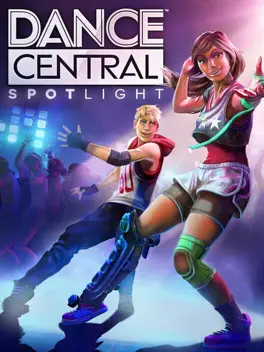
Dance Central Spotlight is a 2014 rhythm game developed by Harmonix and published by Microsoft Studios for the Xbox One Kinect. It is the sequel to Dance Central 3 (2012) and the fourth installment in the Dance Central series. It is also the final Dance Central game to be released for an Xbox console, and the final first-party game overall to require the Kinect sensor. The game provides a stripped-down experience in comparison to previous Dance Central titles, maintaining the core gameplay of the series, but with a focus on providing more routines per-song, the regular release of recent songs as downloadable content, and leverage of improvements to the motion detection capabilities of the Kinect for Xbox One. It was released on September 2, 2014.
From the Wikipedia article Dance Central Spotlight, by its contributors, under CC BY-SA 4.0.
Developer and publisher
Harmonix Music Systems Developer
American video game company
Based in Cambridge · founded 1995 · 7 other games here
Fuser, Amplitude, Rock Band 4, Fantasia: Music Evolved · all 8
Xbox Game Studios Publisher
American video game company
Based in Redmond · founded 2000 · 161 other games here
Clockwork Revolution, Fable, State of Decay 3, Gears of War: E-Day · all 162
Platforms and release dates
| Platforms | Xbox One |
|---|---|
| Released | September 2, 2014 |
Details
| Genre | rhythm game |
|---|---|
| Modes | single-player video game |
| Sold on | Microsoft Store |
| Country | United States |
| Age rating | Teen, PEGI 12 |
| Official site | dancecentral.com |
What critics say
Dance Central Spotlight cuts the series down to just the dancing
Harmonix's Xbox One Kinect dance game drops story and minigames for more routines per song, and critics mostly liked the trade.
Is Dance Central Spotlight worth it?
Dance Central Spotlight is a smaller game on purpose. Critics praised it for clearing away everything between the player and the dance floor, and its flexible practice mode and eight routines per song back that up. The thin feedback and a bundled list of only ten songs are the cost of that focus. If you have a Kinect for Xbox One and want to dance, play it; if you want a fuller party package, skip it.
Best for: Xbox One owners with a Kinect who want a focused dance or fitness game and plan to drill routines. Players who want a party package with lots of modes should look elsewhere.
Written from the published record (critics' reviews, the developer's documentation and the game's history), not a hands-on playthrough. How these are written.
What critics praised
Critic scores by outlet
| Outlet | Score | Out of 100 | Version | Date |
|---|---|---|---|---|
| CriticDB aggregate of 7 | 73/100 | 73 | Xbox One | – |
| OpenCritic aggregate of 20 | 76/100 | 76 | – | October 21, 2014 |
OpenCritic: 45% of critics recommend it.
Scores as recorded on Wikidata, with the outlet's own link where Wikidata cites one. User ratings are not listed.
- AnalysisDance Central Spotlight cuts the series down to just the dancing
Dance Central Spotlight is built on subtraction. The fourth game in Harmonix's Dance Central series keeps the core of the earlier games, where you mirror an on-screen dancer guided by "flash cards"…
Community clips
See allCommunity images
See allNo community reviews yet. Be the first to review Dance Central Spotlight: a score out of 10, what works, what doesn't.
How the score works
7.5GameRaven score = Critics 100%
- Critics7.5100%
- Community–0%
The GameRaven score of 7.5 is the critics' average, from critic aggregates, until members review the game. Community reviews and votes join it as they come in, each counting for more as more people stand behind it. How it's worked out.
Sources
References
- Wikipedia: Dance Central Spotlight en.wikipedia.org
Where the rest comes from
- Facts and critic scores: Wikidata item Q18638417 (CC0), read November 12, 2026. Spotted something wrong? It can be corrected on Wikidata, and the change reaches this page the next time the catalogue is read.
- Summary: Wikipedia, CC BY-SA 4.0.
- Cover art: IGDB.
- Critics' overview written from: Wikipedia: Dance Central Spotlight, CC BY-SA 4.0.
- Critics' overview written from: Wikidata: Q18638417, CC0.
- How the score is worked out: methodology.