Where to buy FAST Racing Neo
Amazon links are affiliate links: as an Amazon Associate we earn from qualifying purchases.
About the game
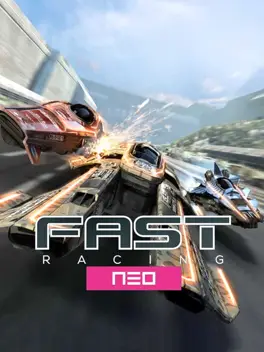
Fast Racing Neo is a racing video game developed by Shin'en Multimedia and released worldwide for the Wii U in December 2015 via the Nintendo eShop, with a retail release in September 2016 in Europe and Australia only. It is the second entry in the Fast series, being the sequel to Fast Racing League. It is often compared to Nintendo's F-Zero franchise. Martin Sauter from Shin'en Multimedia said in an interview with Nintendo Life that the game's Hero Mode was inspired by F-Zero.
From the Wikipedia article Fast Racing Neo, by its contributors, under CC BY-SA 4.0.
Developer
Shin'en Multimedia Developer
German video game developer and publisher
Based in Munich · founded 1999 · 3 other games here
Platforms and release dates
| Platforms | Wii U |
|---|---|
| Released | December 22, 2015 |
Details
| Genre | racing video game |
|---|---|
| Modes | single-player video game, multiplayer video game |
| Sold on | Nintendo eShop |
| Country | Germany |
| Age rating | Everyone |
| Official site | fast.shinen.com |
What critics say
FAST Racing Neo makes its speed depend on a blue and orange switch
Shin'en Multimedia's Wii U racer asks you to match your ship's color to the track at full speed, and critics found that idea challenging and gripping.
Is FAST Racing Neo worth it?
FAST Racing Neo is built on one idea: switch your ship between blue and orange to match the track, and you go faster. Critics found that the idea held up across the game. Destructoid gave it a 9/10, Hardcore Gamer gave it 4 out of 5, and it has a critic average of 8.2, calculated from the critic scores. If you still have a Wii U and like fast, punishing racers, play it.
Best for: Wii U owners who want a fast, difficult futuristic racer often compared to F-Zero, and who enjoy learning a track until every color switch is automatic.
Written from the published record (critics' reviews, the developer's documentation and the game's history), not a hands-on playthrough. How these are written.
What critics praised
- The blue and orange phase switch gives every stretch of track a decision to make[1]
- Phase boost pieces turn color matching into route choices over gaps[1]
- Hero Mode, which Shin'en Multimedia said was inspired by F-Zero, is there for players who want a harder test[1]
- Single-player and multiplayer, praised by Hardcore Gamer for both[1]
- The 2016 add-on brought 8 tracks and 10 vehicles[1]
Critic scores by outlet
| Outlet | Score | Out of 100 | Version | Date |
|---|---|---|---|---|
| OpenCritic aggregate of 33 | 82/100 | 82 | – | January 7, 2016 |
OpenCritic: 78% of critics recommend it.
Scores as recorded on Wikidata, with the outlet's own link where Wikidata cites one. User ratings are not listed.
- AnalysisFAST Racing Neo makes its speed depend on a blue and orange switch
Strip FAST Racing Neo down and one mechanic is left. Parts of every track are colored blue or orange, and your ship can switch between those two colors, called phases. Drive over a blue section in…
Community clips
See allCommunity images
See allNo community reviews yet. Be the first to review FAST Racing Neo: a score out of 10, what works, what doesn't.
How the score works
8.2GameRaven score = Critics 100%
- Critics8.2100%
- Community–0%
The GameRaven score of 8.2 is the critics' average, from critic aggregates, until members review the game. Community reviews and votes join it as they come in, each counting for more as more people stand behind it. How it's worked out.
Sources
References
- Wikipedia: Fast Racing Neo en.wikipedia.org
Where the rest comes from
- Facts and critic scores: Wikidata item Q21775734 (CC0), read November 12, 2026. Spotted something wrong? It can be corrected on Wikidata, and the change reaches this page the next time the catalogue is read.
- Summary: Wikipedia, CC BY-SA 4.0.
- Cover art: IGDB.
- Critics' overview written from: Wikipedia: Fast Racing Neo, CC BY-SA 4.0.
- Critics' overview written from: Wikidata: Q21775734, CC0.
- How the score is worked out: methodology.