About the game
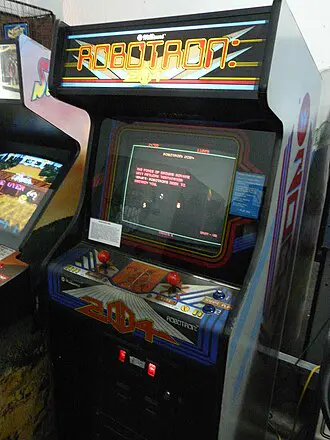
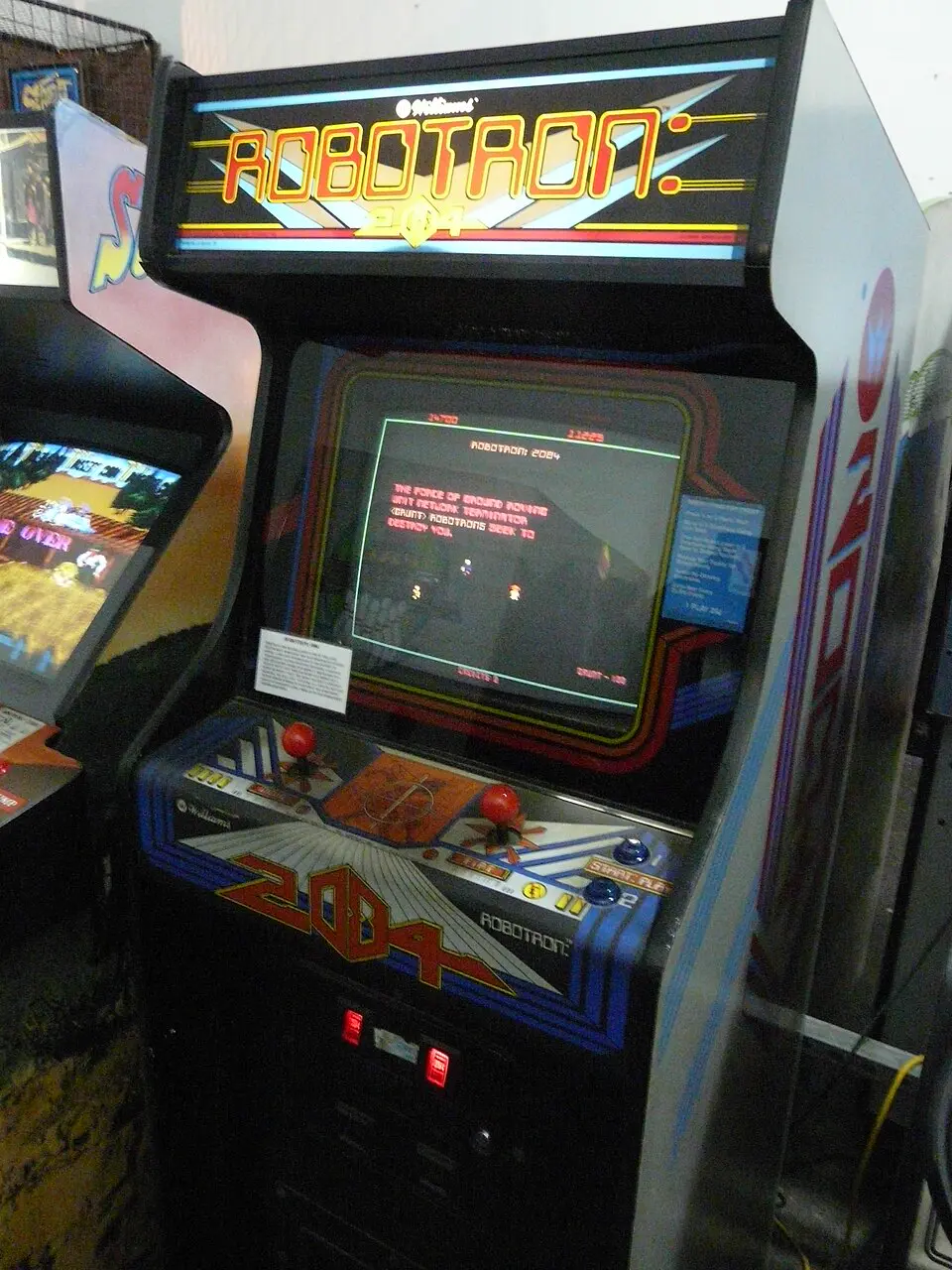
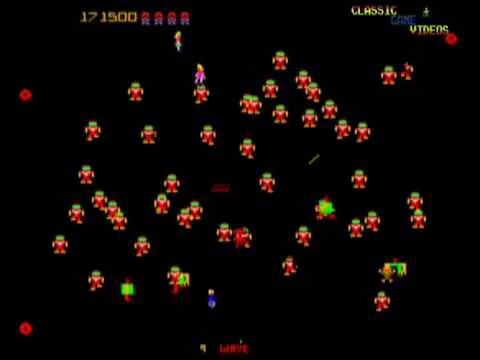
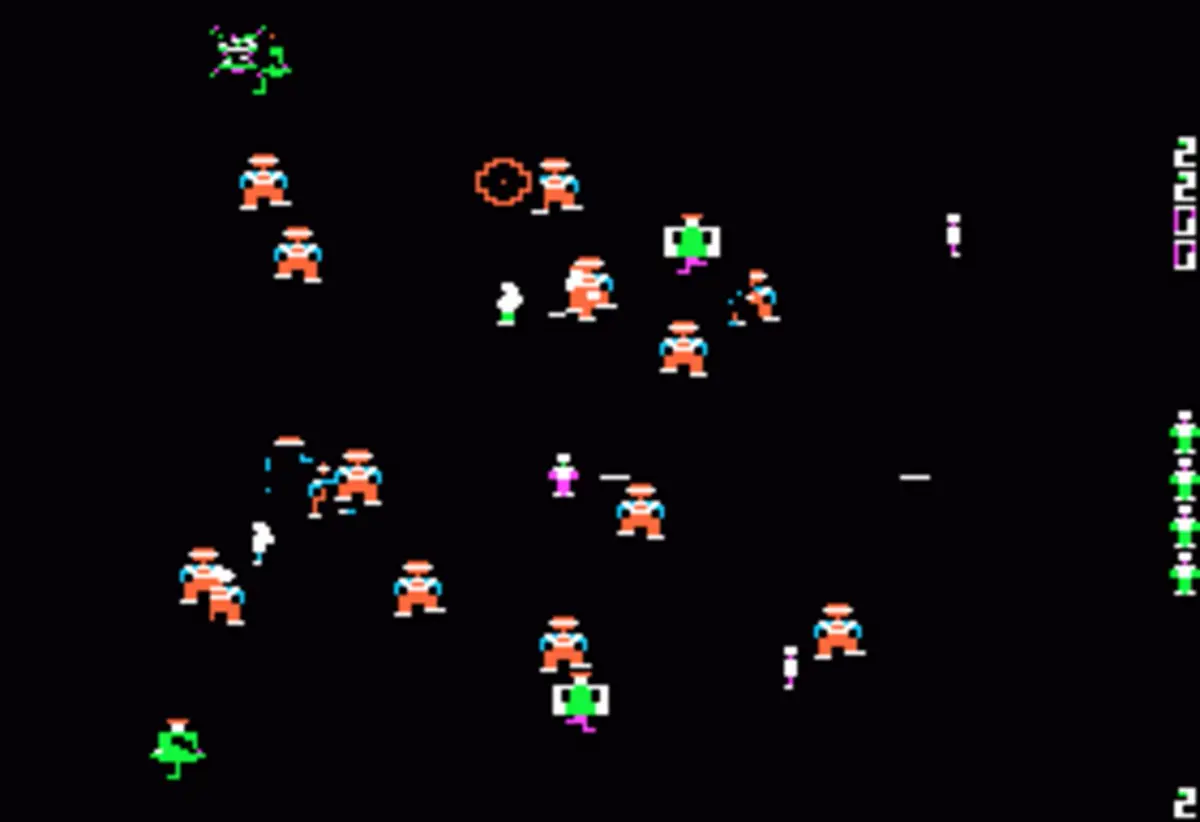
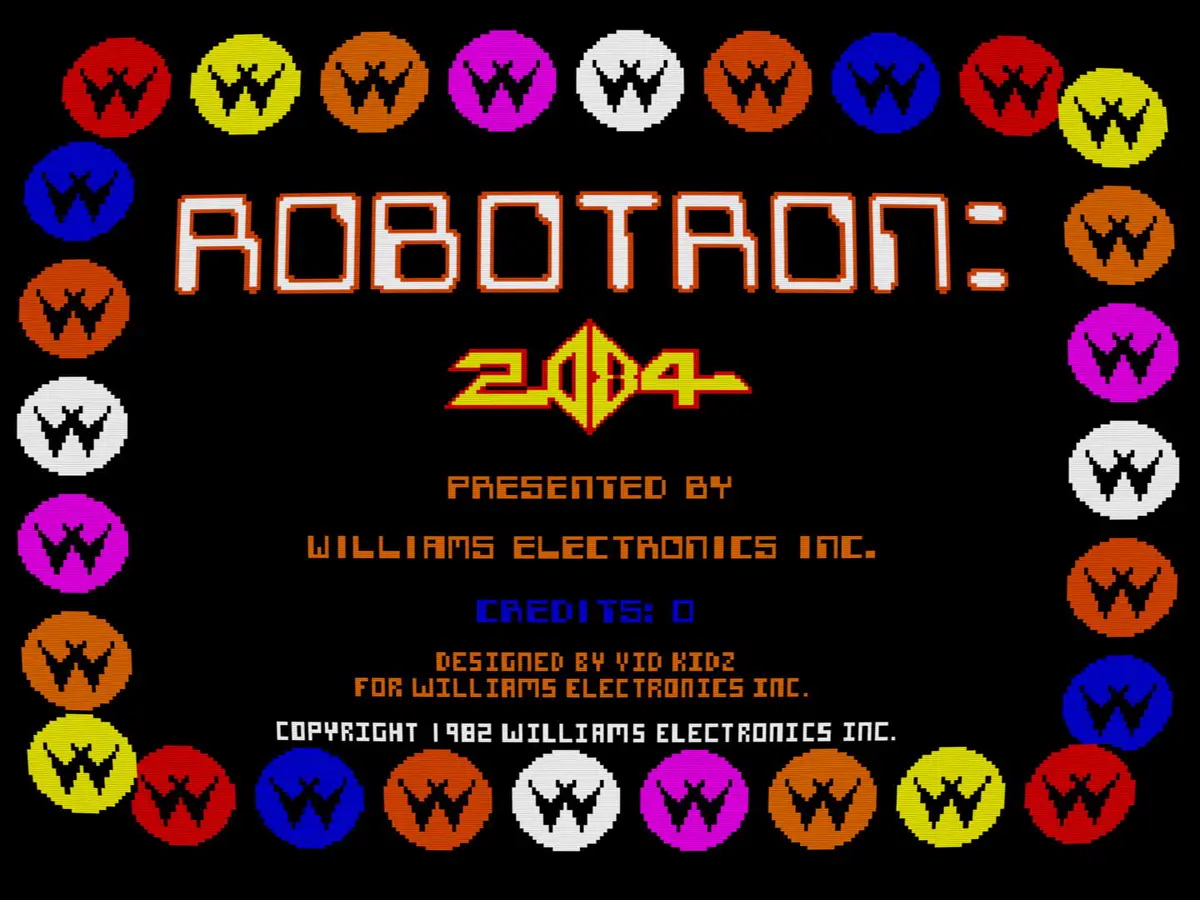
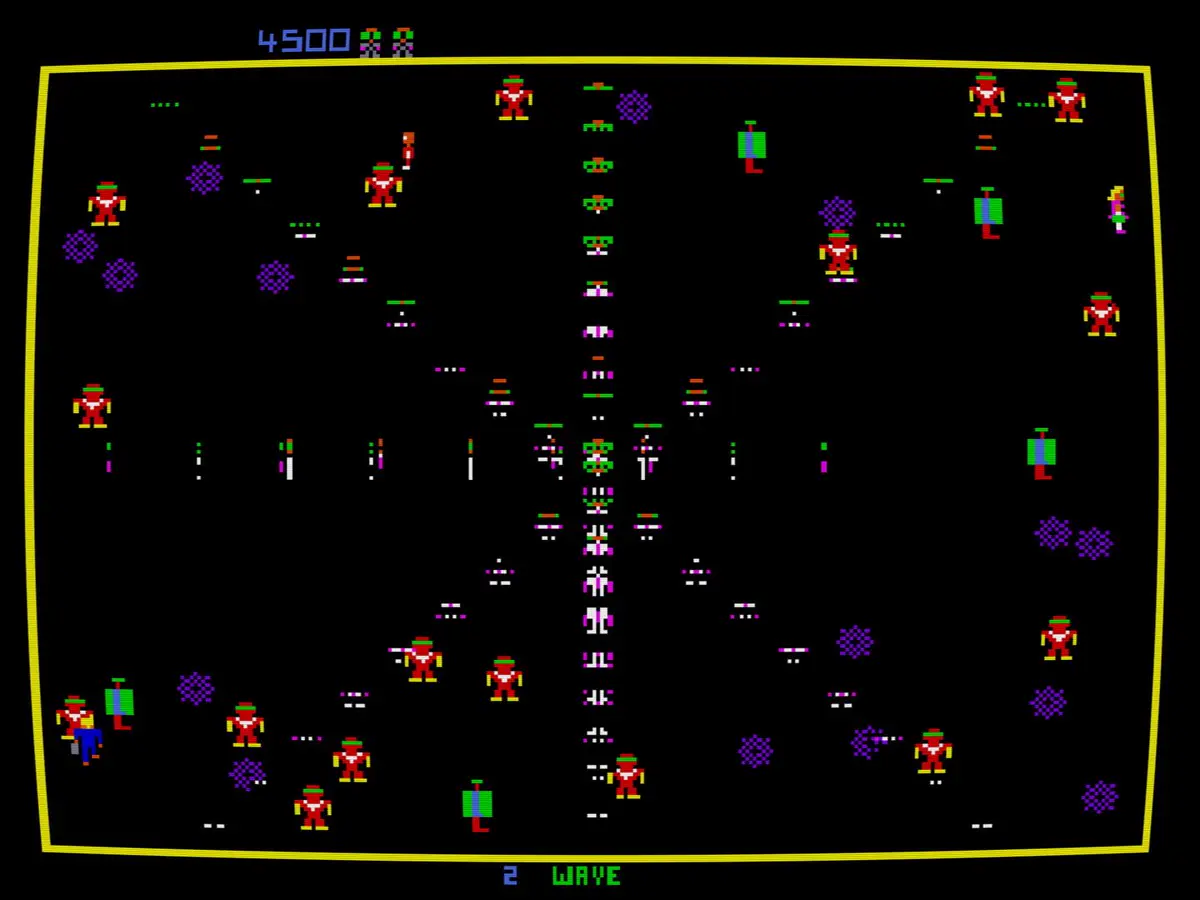
Robotron: 2084 is a twin-stick shooter video game developed by Eugene Jarvis and Larry DeMar of Vid Kidz and released by Williams Electronics for arcades in 1982. The game is set in the year 2084 in a dystopian future where robots have turned against humans in a cybernetic revolt. The player's goals are to defeat endless waves of robots, rescue surviving humans, and earn as many points as possible.
From the Wikipedia article Robotron: 2084, by its contributors, under CC BY-SA 4.0.
Developer and publisher
WMS Industries Publisher
American gaming company and manufacturer of pinballs and slot machines
Based in Chicago · founded 1974 · 9 other games here
Ultimate Mortal Kombat 3, Mortal Kombat 3, Doom, Smash TV · all 10
Platforms and release dates
| Platforms | ZX Spectrum, Commodore 64, DOS, Atari ST, Atari 5200, Atari 7800, Commodore VIC-20 |
|---|---|
| Released | 1982 |
Details
| Genre | shoot 'em up |
|---|---|
| Modes | single-player video game, multiplayer video game |
| Country | United States |
What critics say
Is Robotron: 2084 worth playing?
One critic scored Robotron: 2084 82 out of 100. That makes its GameRaven score 8.2 out of 10. See every critic score.
Critic scores by outlet
| Outlet | Score | Out of 100 | Version | Date |
|---|---|---|---|---|
| Gen4 | 82% | 82 | Atari Lynx | – |
Scores as recorded on Wikidata, with the outlet's own link where Wikidata cites one. User ratings are not listed.
No community posts about Robotron: 2084 yet. Write the first: a guide, an analysis or an opinion piece. Your post gets a page of its own.
Community clips
See allCommunity images
See allNo community reviews yet. Be the first to review Robotron: 2084: a score out of 10, what works, what doesn't.
How the score works
8.2GameRaven score = Critics 100%
- Critics8.2100%
- Community–0%
The GameRaven score of 8.2 is the critics' average, from 1 critic, until members review the game. Community reviews and votes join it as they come in, each counting for more as more people stand behind it. How it's worked out.
Sources
- Facts and critic scores: Wikidata item Q1736788 (CC0), read November 12, 2026. Spotted something wrong? It can be corrected on Wikidata, and the change reaches this page the next time the catalogue is read.
- Summary: Wikipedia, CC BY-SA 4.0.
- Image: Musée Mécanique 188.JPG by User:Piotrus, CC BY-SA 3.0, via Wikimedia Commons.
- How the score is worked out: methodology.