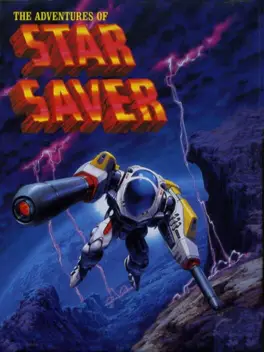
Where to buy The Adventures of Star Saver
Amazon links are affiliate links: as an Amazon Associate we earn from qualifying purchases.
About the game
The Adventures of Star Saver, known in Japan as Rubble Saver (ラブルセイバー), is a 2D platform game for the Game Boy. It is a quasi-sequel to the earlier Miracle Ropitt for Famicom.
From the Wikipedia article The Adventures of Star Saver, by its contributors, under CC BY-SA 4.0.
Publisher
King Records Publisher
Japanese record label; imprint of King Record Co., Ltd
Japan · founded 1931 · 0 other games here
Platforms and release dates
| Platforms | Game Boy |
|---|---|
| Released | May 17, 1991 |
Details
| Genre | platform game, shoot 'em up, science fiction video game, post-apocalyptic video game |
|---|---|
| Modes | single-player video game |
| Country | Japan |
What critics say
Is The Adventures of Star Saver worth playing?
One critic scored The Adventures of Star Saver 74 out of 100. That makes its GameRaven score 7.4 out of 10. See every critic score.
Critic scores by outlet
| Outlet | Score | Out of 100 | Version | Date |
|---|---|---|---|---|
| Gen4 | 74% | 74 | Game Boy | – |
Scores as recorded on Wikidata, with the outlet's own link where Wikidata cites one. User ratings are not listed.
No community posts about The Adventures of Star Saver yet. Write the first: a guide, an analysis or an opinion piece. Your post gets a page of its own.
Community clips
See allCommunity images
See allNo community reviews yet. Be the first to review The Adventures of Star Saver: a score out of 10, what works, what doesn't.
How the score works
7.4GameRaven score = Critics 100%
- Critics7.4100%
- Community–0%
The GameRaven score of 7.4 is the critics' average, from 1 critic, until members review the game. Community reviews and votes join it as they come in, each counting for more as more people stand behind it. How it's worked out.
Sources
- Facts and critic scores: Wikidata item Q7712651 (CC0), read November 12, 2026. Spotted something wrong? It can be corrected on Wikidata, and the change reaches this page the next time the catalogue is read.
- Summary: Wikipedia, CC BY-SA 4.0.
- Cover art: IGDB.
- How the score is worked out: methodology.