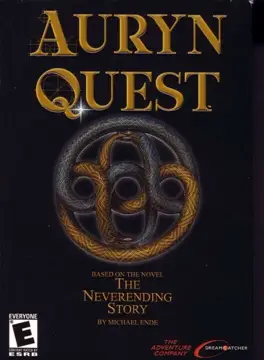
Where to buy The Real Neverending Story Part 1: Auryn Quest
Amazon links are affiliate links: as an Amazon Associate we earn from qualifying purchases.
About the game
Auryn Quest is a platforming adventure game based on Michael Ende's novel The Neverending Story and his film adaptation of the same name. Originally developed by Discreet Monsters, "bad luck and mishaps" left the company bankrupt, and the game was eventually completed by Attaction. Initially an ambitious adventure game, bankruptcy forced the release to be reworked into a first-person action, 3D platformer jump game vaguely based on its source material. The first entry in a subsequently abandoned series, it became the sole game project for Discreet Monsters.
From the Wikipedia article The Real Neverending Story Part 1: Auryn Quest, by its contributors, under CC BY-SA 4.0.
Platforms and release dates
| Platforms | Microsoft Windows |
|---|---|
| Released | 2001 |
PC system requirements
Not added yet.
Details
| Country | Germany |
|---|---|
| Age rating | Everyone |
| Official site | aurynquest.com:80 |
What critics say
Is The Real Neverending Story Part 1: Auryn Quest worth playing?
One critic scored The Real Neverending Story Part 1: Auryn Quest 5 out of 100. That makes its GameRaven score 0.5 out of 10. See every critic score.
Critic scores by outlet
| Outlet | Score | Out of 100 | Version | Date |
|---|---|---|---|---|
| Gen4 | 5% | 5 | PC game | – |
Scores as recorded on Wikidata, with the outlet's own link where Wikidata cites one. User ratings are not listed.
No community posts about The Real Neverending Story Part 1: Auryn Quest yet. Write the first: a guide, an analysis or an opinion piece. Your post gets a page of its own.
Community clips
See allCommunity images
See allNo community reviews yet. Be the first to review The Real Neverending Story Part 1: Auryn Quest: a score out of 10, what works, what doesn't.
How the score works
0.5GameRaven score = Critics 100%
- Critics0.5100%
- Community–0%
The GameRaven score of 0.5 is the critics' average, from 1 critic, until members review the game. Community reviews and votes join it as they come in, each counting for more as more people stand behind it. How it's worked out.
Sources
- Facts and critic scores: Wikidata item Q55635499 (CC0), read November 12, 2026. Spotted something wrong? It can be corrected on Wikidata, and the change reaches this page the next time the catalogue is read.
- Summary: Wikipedia, CC BY-SA 4.0.
- Cover art: IGDB.
- How the score is worked out: methodology.