Where to buy The Last Spell
Amazon links are affiliate links: as an Amazon Associate we earn from qualifying purchases.
About the game
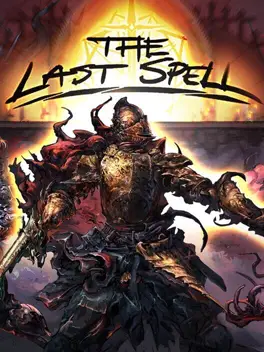
The Last Spell is a roguelite, tactical role-playing game developed by French studio Ishtar Games and published by The Arcade Crew. The game released into early access on Steam in June 2021. The final version of the game released on March 9, 2023, on the same day as the launch of the console versions for Nintendo Switch, PlayStation 4, and PlayStation 5. The game is available in English, French, Chinese, and Japanese.
From the Wikipedia article The Last Spell, by its contributors, under CC BY-SA 4.0.
Developer
Ishtar Games Developer
French video game developer
Based in Tourcoing · founded 2005 · 2 other games here
Platforms and release dates
| Platforms | Microsoft Windows, PlayStation 4, Nintendo Switch |
|---|---|
| Released | June 3, 2021 |
PC system requirements
Not added yet.
Details
| Genre | role-playing video game |
|---|---|
| Modes | single-player video game |
| Engine | Unity |
| Sold on | Steam |
| Country | France |
| Official site | lastspell.com |
What critics say
Three heroes against hundreds of undead, and the imbalance is the point
The Last Spell turns a hopeless siege into a turn-based puzzle where daytime building decides whether the magic circle survives the night.
Is The Last Spell worth it?
The Last Spell builds everything around one deliberate imbalance: a few heroes holding a magic circle against a growing undead horde. Gear-driven heroes, day phases for building defenses and enemy mixes that change every night give that idea plenty of depth. Critic aggregates landed at 81/100 and 78%, and its critic average of 8.1 is computed from those scores. If you enjoy turn-based tactics and some planning between fights, play it.
Best for: Players who like turn-based tactics with a base-building layer, and who enjoy planning a defense more than playing an overpowered hero.
Written from the published record (critics' reviews, the developer's documentation and the game's history), not a hands-on playthrough. How these are written.
What critics praised
- Gear-based actions replace fixed classes, so heroes can be built for almost any role[1]
- Day phases make building and spending as important as the fighting[1]
- Randomized enemy mixes, including archers, runners and ghosts, force new tactics each night[1]
- Omens let you adjust each town before you start[1]
- Several towns, each with its own map and a boss fight at the end[1]
Critic scores by outlet
| Outlet | Score | Out of 100 | Version | Date |
|---|---|---|---|---|
| OpenCritic aggregate of 18 | 81/100 | 81 | – | November 27, 2023 |
OpenCritic: 78% of critics recommend it.
Scores as recorded on Wikidata, with the outlet's own link where Wikidata cites one. User ratings are not listed.
- AnalysisThree heroes against hundreds of undead, and the imbalance is the point
The core of The Last Spell is a turn-based fight at night. You move a small group of heroes across square tiles, then the whole undead horde takes its turn. Each enemy steps a few squares closer to…
Community clips
See allCommunity images
See allNo community reviews yet. Be the first to review The Last Spell: a score out of 10, what works, what doesn't.
How the score works
8.1GameRaven score = Critics 100%
- Critics8.1100%
- Community–0%
The GameRaven score of 8.1 is the critics' average, from critic aggregates, until members review the game. Community reviews and votes join it as they come in, each counting for more as more people stand behind it. How it's worked out.
Sources
References
- Wikipedia: The Last Spell en.wikipedia.org
Where the rest comes from
- Facts and critic scores: Wikidata item Q106967664 (CC0), read November 12, 2026. Spotted something wrong? It can be corrected on Wikidata, and the change reaches this page the next time the catalogue is read.
- Summary: Wikipedia, CC BY-SA 4.0.
- Cover art: IGDB.
- Critics' overview written from: Wikipedia: The Last Spell, CC BY-SA 4.0.
- Critics' overview written from: Wikidata: Q106967664, CC0.
- How the score is worked out: methodology.