
Where to buy Core Keeper
Amazon links are affiliate links: as an Amazon Associate we earn from qualifying purchases.
About the game
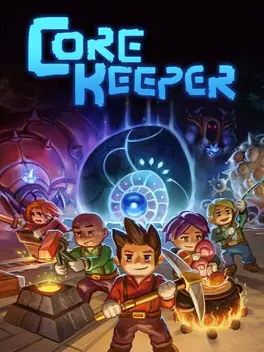
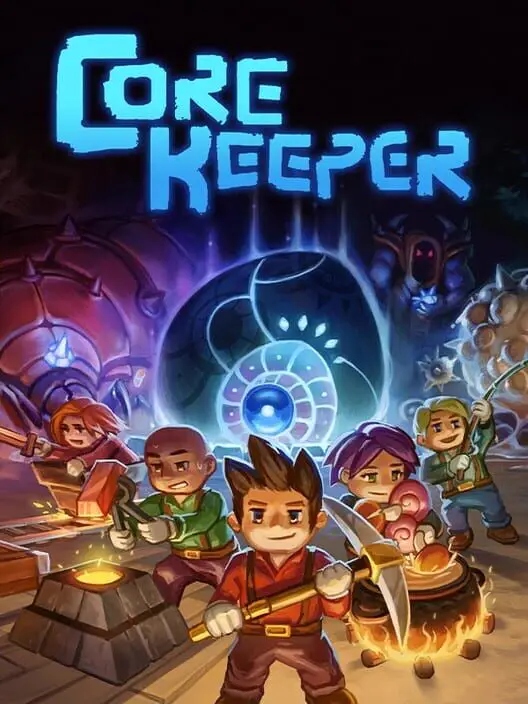
Core Keeper is a survival game and sandbox game developed by Pugstorm and published by Fireshine Games. Set in a procedurally generated underground world, the game combines mining, crafting, farming, automation, and combat while supporting single-player and cooperative multiplayer for up to eight players. Critics have compared its mechanics and tone to Minecraft, Terraria, and Stardew Valley for blending exploration, base-building and survival systems within a darker, atmospheric cave setting.
From the Wikipedia article Core Keeper, by its contributors, under CC BY-SA 4.0.
Publisher
Fireshine Games Publisher
Video game publisher
Based in London · founded 2009 · 12 other games here
Denshattack!, Tales of Seikyu, A.I.L.A., Gestalt: Steam & Cinder · all 13
Platforms and release dates
| Platform | Released |
|---|---|
| Linux | – |
| Microsoft Windows | March 8, 2022 August 27, 2024 |
| PlayStation 4 | October 17, 2024 |
| Xbox One | October 17, 2024 |
| Nintendo Switch | October 17, 2024 |
| PlayStation 5 | August 27, 2024 |
| Xbox Series X and Series S | August 27, 2024 |
| Nintendo Switch 2 | January 28, 2026 |
PC system requirements
Not added yet.
Details
| Genre | adventure video game |
|---|---|
| Modes | single-player video game, co-op mode |
| Engine | Unity |
| Sold on | Steam, Humble Store |
| Country | Sweden |
What critics say
Core Keeper takes familiar survival crafting underground, and it works
Critics found that digging outward from one glowing chamber makes a well-worn sandbox loop feel new, though the material grind wears on some.
Is Core Keeper worth it?
Core Keeper puts the survival-crafting loop from Minecraft and Terraria into a dark, procedurally generated cave, and critics agreed that the change of setting keeps the loop fresh. Clear crafting tiers, varied biomes, deep automation and co-op for up to eight players earned it an 86/100 aggregate from 21 critics, with 95% recommending it. The complaints are about repetitive material grinding and fiddly inventory, not about the core design. If you like digging, building and slowly getting stronger, play it.
Best for: Players who enjoy the digging and building of Terraria or Minecraft and want a cozier, moodier version, especially groups looking for a long co-op project. If material grinding wears you out quickly, this one may drag.
Written from the published record (critics' reviews, the developer's documentation and the game's history), not a hands-on playthrough. How these are written.
What critics praised
- Dark cave setting makes familiar survival crafting feel fresh[1]
- Crafting tiers and early bosses give the sandbox a clear direction[1]
- Deep automation with conveyors, mechanical arms and wiring[1]
- Co-op for up to eight players, including dedicated servers[1]
- Art, animation and music drew consistent praise[1]
Critic scores by outlet
| Outlet | Score | Out of 100 | Version | Date |
|---|---|---|---|---|
| CriticDB aggregate of 6 | 84/100 | 84 | Xbox Series X and Series S, PlayStation 5, Nintendo Switch, Xbox One, PlayStation 4, Microsoft Windows | – |
| OpenCritic aggregate of 21 | 86/100 | 86 | – | February 25, 2026 |
OpenCritic: 95% of critics recommend it.
Scores as recorded on Wikidata, with the outlet's own link where Wikidata cites one. User ratings are not listed.
- AnalysisCore Keeper takes familiar survival crafting underground, and it works
The whole game rests on one idea. Players start in a central chamber with the Core and dig outward. Every tunnel cleared, every resource gathered and every boss beaten pushes the map a little further…
Community clips
See allCommunity images
See allNo community reviews yet. Be the first to review Core Keeper: a score out of 10, what works, what doesn't.
How the score works
8.5GameRaven score = Critics 100%
- Critics8.5100%
- Community–0%
The GameRaven score of 8.5 is the critics' average, from critic aggregates, until members review the game. Community reviews and votes join it as they come in, each counting for more as more people stand behind it. How it's worked out.
Sources
References
- Wikipedia: Core Keeper en.wikipedia.org
Where the rest comes from
- Facts and critic scores: Wikidata item Q111226203 (CC0), read November 12, 2026. Spotted something wrong? It can be corrected on Wikidata, and the change reaches this page the next time the catalogue is read.
- Summary: Wikipedia, CC BY-SA 4.0.
- Cover art: IGDB.
- Critics' overview written from: Wikipedia: Core Keeper, CC BY-SA 4.0.
- Critics' overview written from: Wikidata: Q111226203, CC0.
- How the score is worked out: methodology.