Where to buy FTL: Faster Than Light
Amazon links are affiliate links: as an Amazon Associate we earn from qualifying purchases.
About the game
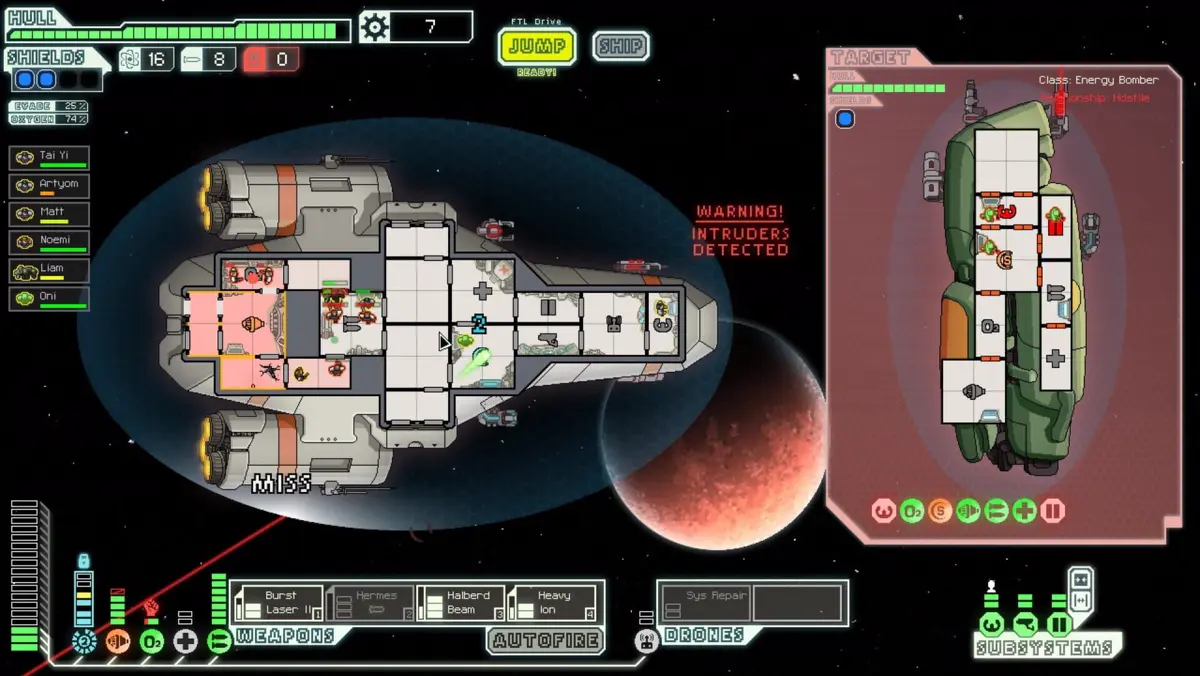
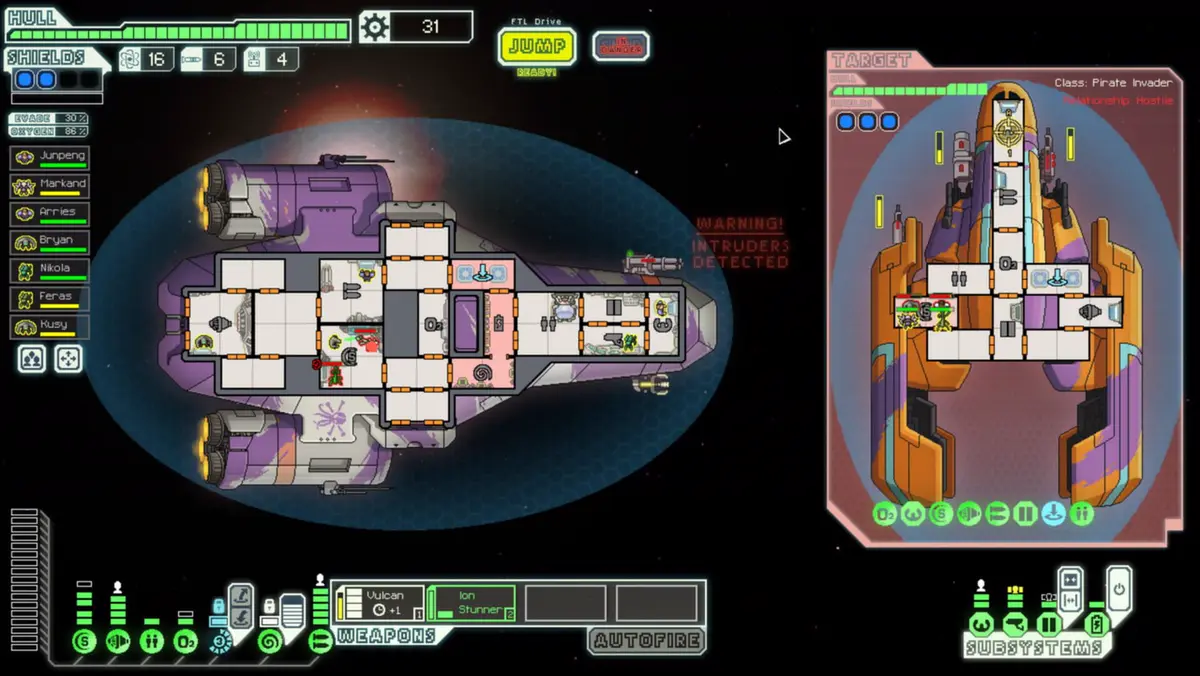
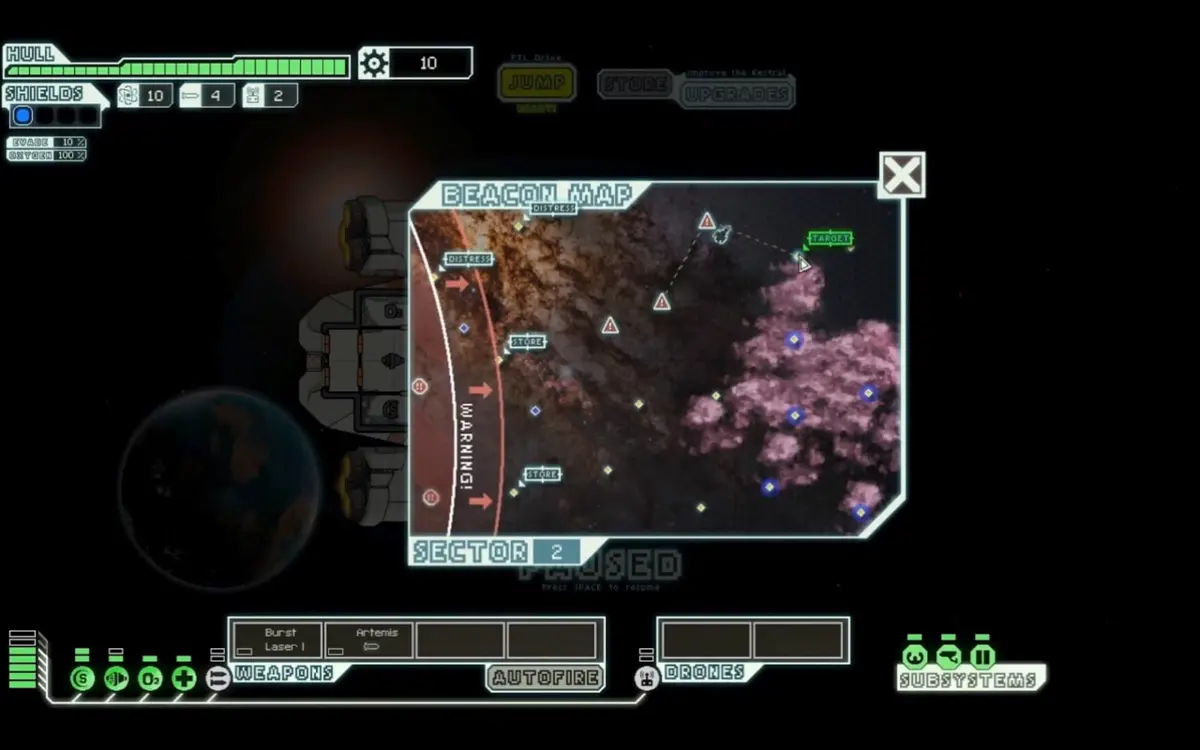
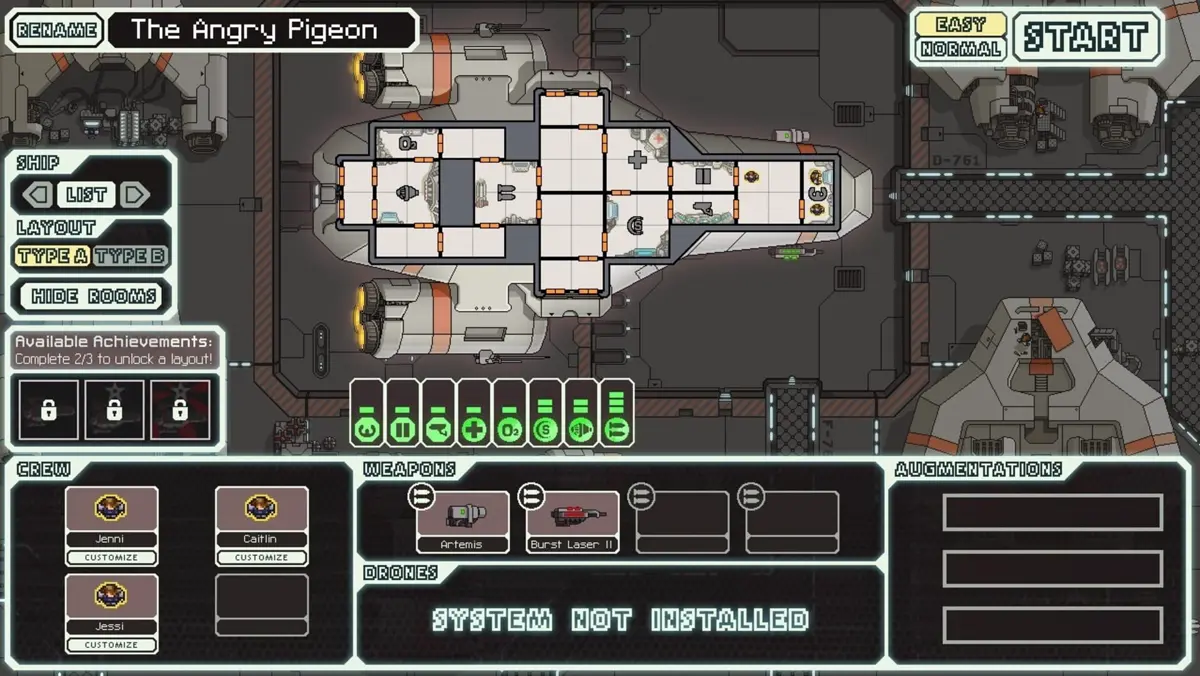
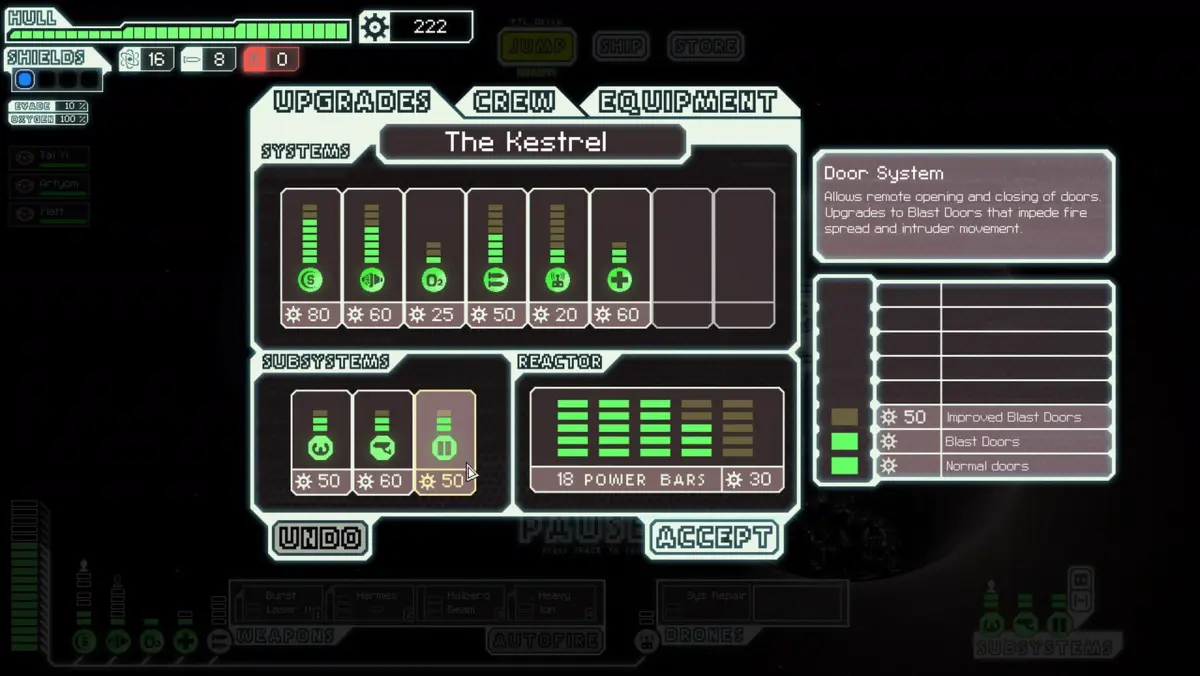
FTL: Faster Than Light is a roguelike game created by indie developer Subset Games, which was released for Windows, MacOS, and Linux in September 2012. In the game, the player controls the crew of a single spacecraft, holding critical information to be delivered to an allied fleet, while being pursued by a large rebel fleet. The player must guide the spacecraft through eight sectors, each with planetary systems and events procedurally generated in a roguelike fashion, while facing rebel and other hostile forces, recruiting new crew, and outfitting and upgrading their ship. Combat takes place in pausable real time, and if the ship is destroyed or all of its crew lost, the game ends, forcing the player to restart with a new ship.
From the Wikipedia article FTL: Faster Than Light, by its contributors, under CC BY-SA 4.0.
Developer and publisher
Subset Games Developer and Publisher
Video game developer
United States · founded 2012 · 1 other game here
Platforms and release dates
| Platforms | Linux, Microsoft Windows, macOS, iOS |
|---|---|
| Released | September 14, 2012 |
PC system requirements
Not added yet.
Details
| Genre | strategy video game, roguelike, space flight simulation game, science fiction video game, roguelite |
|---|---|
| Modes | single-player video game |
| Sold on | Steam, GOG.com, Epic Games Store, Humble Store |
| Country | United States |
| Age rating | Everyone 10+ |
| Official site | subsetgames.com |
What critics say
FTL turns a starship captain fantasy into short, punishing runs worth repeating
Subset Games' 2012 roguelike won over critics with tense ship management and permadeath, though some found its difficulty cruel.
Is FTL: Faster Than Light worth it?
FTL: Faster Than Light is a small game with a big pull. Critics praised how it lets you feel like a starship captain making hard calls under pressure, and it collected design awards to back that up. Its difficulty is the price: some reviewers called it punishing, and losing a whole run to one bad jump is part of the design. If you like strategy and can shrug off a loss, play it.
Best for: Strategy fans who want to manage a starship and its crew in short, tense runs, and who can treat a lost run as practice rather than a setback. Players who need a guaranteed ending should look elsewhere.
Written from the published record (critics' reviews, the developer's documentation and the game's history), not a hands-on playthrough. How these are written.
What critics praised
- Constant, readable trade-offs between fuel, scrap and the advancing rebel fleet[1]
- Pausable real-time combat gives you room to plan under pressure[1]
- Eight crew species with real strengths and weaknesses vary every run[1]
- Soundtrack recognized by IGN and Kotaku[1]
- Touch controls on iPad praised as well tuned[1]
Critic scores by outlet
| Outlet | Score | Out of 100 | Version | Date |
|---|---|---|---|---|
| Kritikanstvo aggregate of 12 | 88/100 | 88 | – | – |
| Gameblog.fr | 9/10 | 90 | – | October 4, 2012 |
Scores as recorded on Wikidata, with the outlet's own link where Wikidata cites one. User ratings are not listed.
- AnalysisFTL turns a starship captain fantasy into short, punishing runs worth repeating
FTL is built for strategy players who have always pictured themselves in the captain's chair. You don't steer a fighter through space. You manage a single ship from a top-down view: which rooms get…
Community clips
See allCommunity images
See allNo community reviews yet. Be the first to review FTL: Faster Than Light: a score out of 10, what works, what doesn't.
How the score works
8.8GameRaven score = Critics 100%
- Critics8.8100%
- Community–0%
The GameRaven score of 8.8 is the critics' average, from critic aggregates, until members review the game. Community reviews and votes join it as they come in, each counting for more as more people stand behind it. How it's worked out.
Sources
References
- Wikipedia: FTL: Faster Than Light en.wikipedia.org
Where the rest comes from
- Facts and critic scores: Wikidata item Q4308783 (CC0), read November 12, 2026. Spotted something wrong? It can be corrected on Wikidata, and the change reaches this page the next time the catalogue is read.
- Summary: Wikipedia, CC BY-SA 4.0.
- Cover art: IGDB.
- Critics' overview written from: Wikipedia: FTL: Faster Than Light, CC BY-SA 4.0.
- Critics' overview written from: Wikidata: Q4308783, CC0.
- How the score is worked out: methodology.