


Where to buy Half-Life 2
Amazon links are affiliate links: as an Amazon Associate we earn from qualifying purchases.
About the game
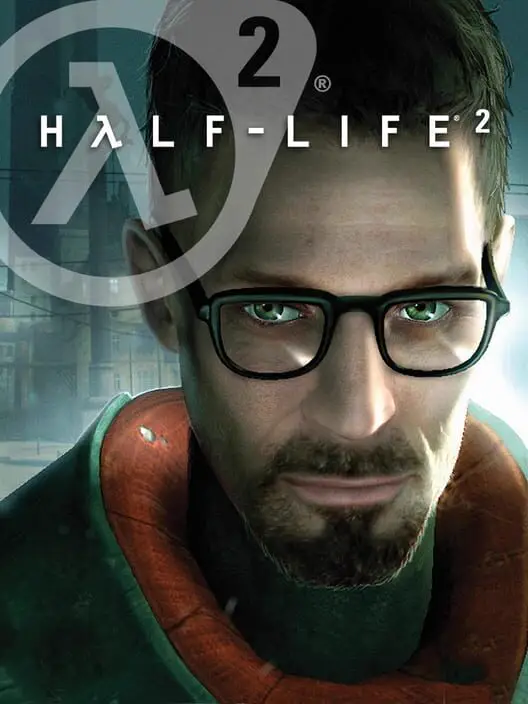
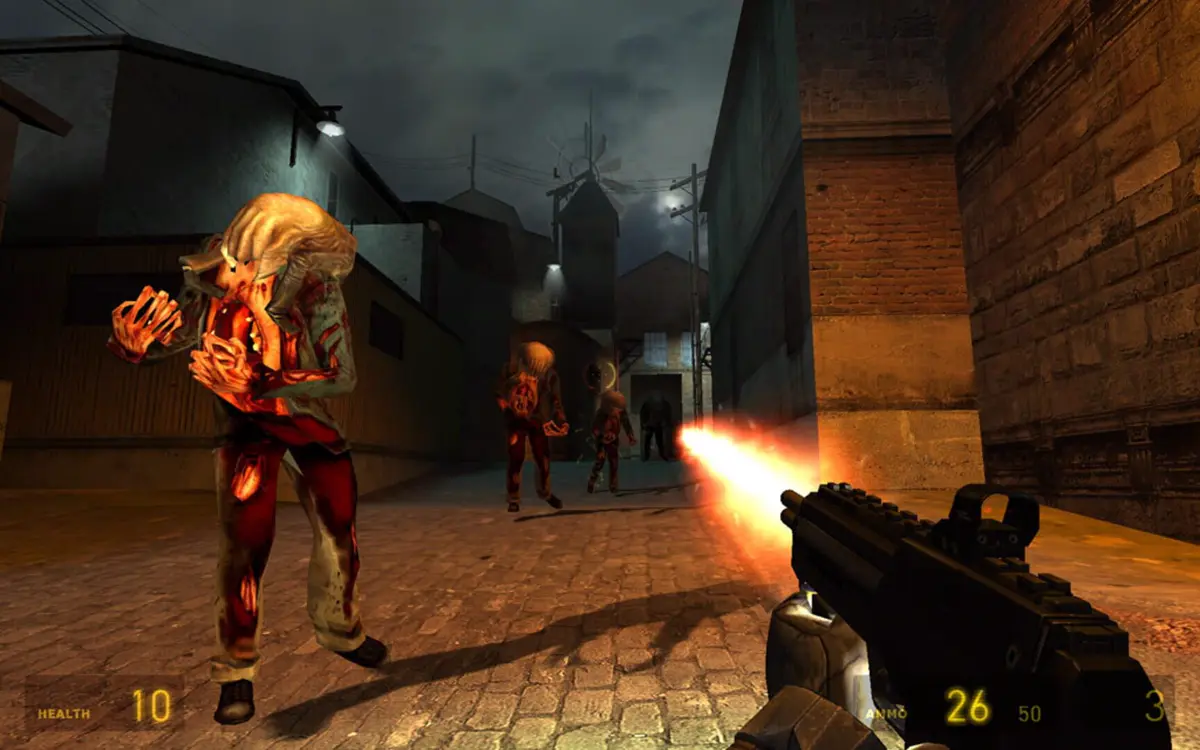
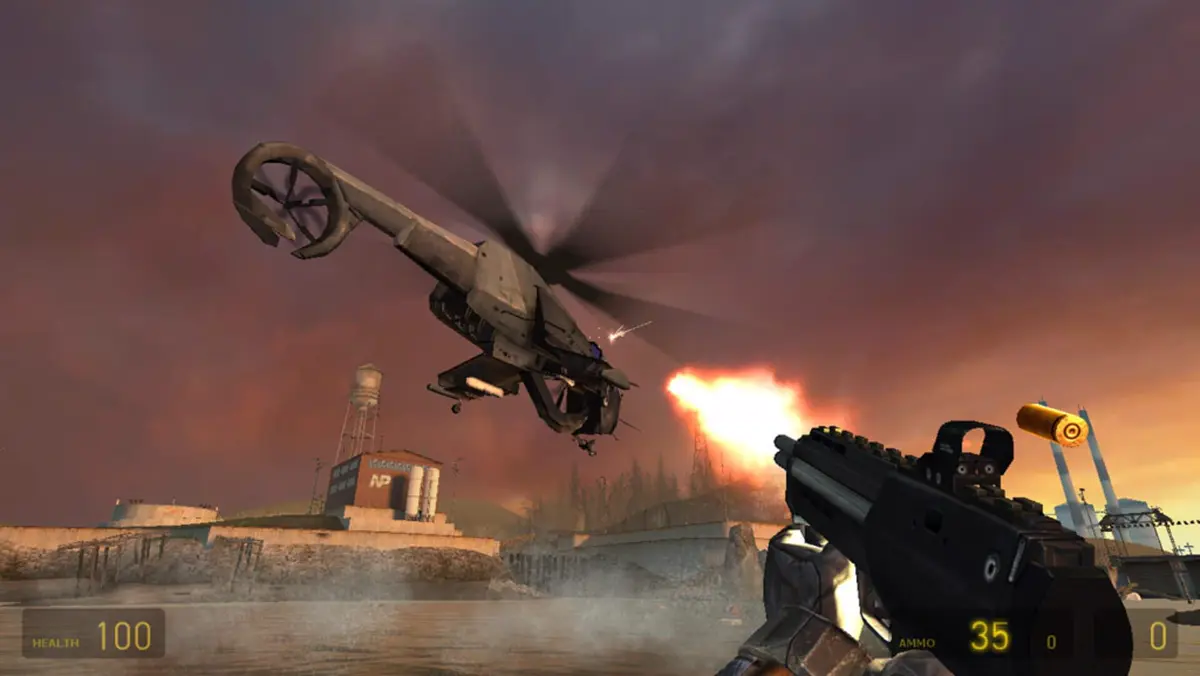
Half-Life 2 is a 2004 first-person shooter (FPS) game developed and published by Valve Corporation. It was published for Windows on November 16, 2004, on Valve's digital distribution service, Steam. Like the original Half-Life (1998), Half-Life 2 combines combat, puzzles and storytelling, and adds features such as vehicles and physics-based gameplay. The player controls Gordon Freeman, who joins a resistance effort to liberate Earth from the alien Combine empire.
From the Wikipedia article Half-Life 2, by its contributors, under CC BY-SA 4.0.
Developer and publisher
Valve Corporation Developer and Publisher
American video game development and digital distribution company
Based in Bellevue · founded 1996 · 27 other games here
Counter-Strike 2, Half-Life: Alyx, Artifact, The Escapists 2 · all 28
Platforms and release dates
| Platform | Released |
|---|---|
| Android | – |
| Linux | May 2013 |
| Microsoft Windows | November 16, 2004 (worldwide) |
| PlayStation 3 | – |
| macOS | May 26, 2010 |
| Xbox 360 | – |
| Xbox | November 15, 2005 (North America) November 18, 2005 (European Union) |
PC system requirements
Not added yet.
Details
| Genre | first-person shooter, science fiction video game, post-apocalyptic video game, science fiction horror |
|---|---|
| Modes | single-player video game |
| Engine | Source |
| Series | Half-Life |
| Sold on | Steam |
| Country | United States |
| Age rating | Mature 17+, PEGI 18 |
| Official site | half-life.com |
What critics say
Half-Life 2 turns crates, saw blades and grenades into your best weapons
Valve's 2004 shooter built its fights around a physics gun, and critics still rank it among the best games ever made.
Is Half-Life 2 worth it?
Half-Life 2 earned a 96 on Metacritic from 81 reviews, and the reasons hold up: the gravity gun makes every fight a physics problem, and the story plays out without taking control away from you. The console versions drew real complaints, and one respected outlet thought it fell short of the original. On PC, it remains one of the safest recommendations in the genre. Play it.
Best for: Adults who want a story-driven single-player shooter where physics matters as much as aim, ideally played on PC. It's also the natural next step after the original Half-Life.
Written from the published record (critics' reviews, the developer's documentation and the game's history), not a hands-on playthrough. How these are written.
What critics praised
- The gravity gun turns objects, and even enemy grenades, into weapons and shields[1]
- Physics puzzles use the same skills as the combat[1]
- The story plays out through scripted scenes without taking away your control[1]
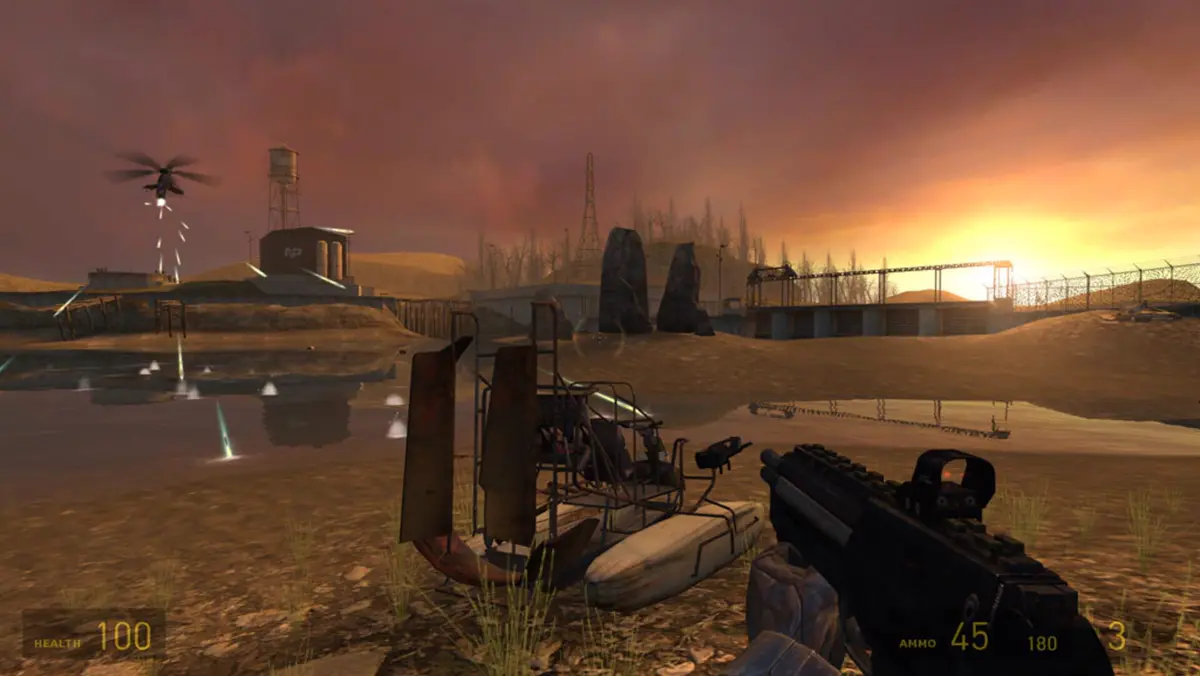
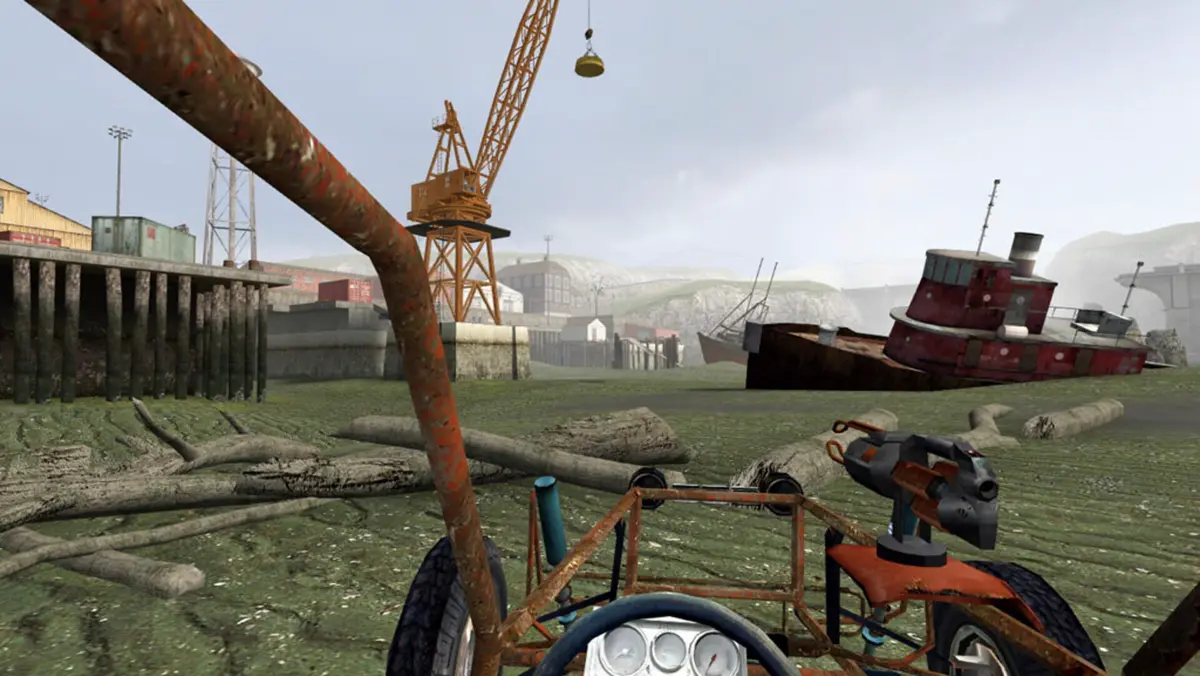
- Airboat and dune buggy sections break up the gunfights[1]
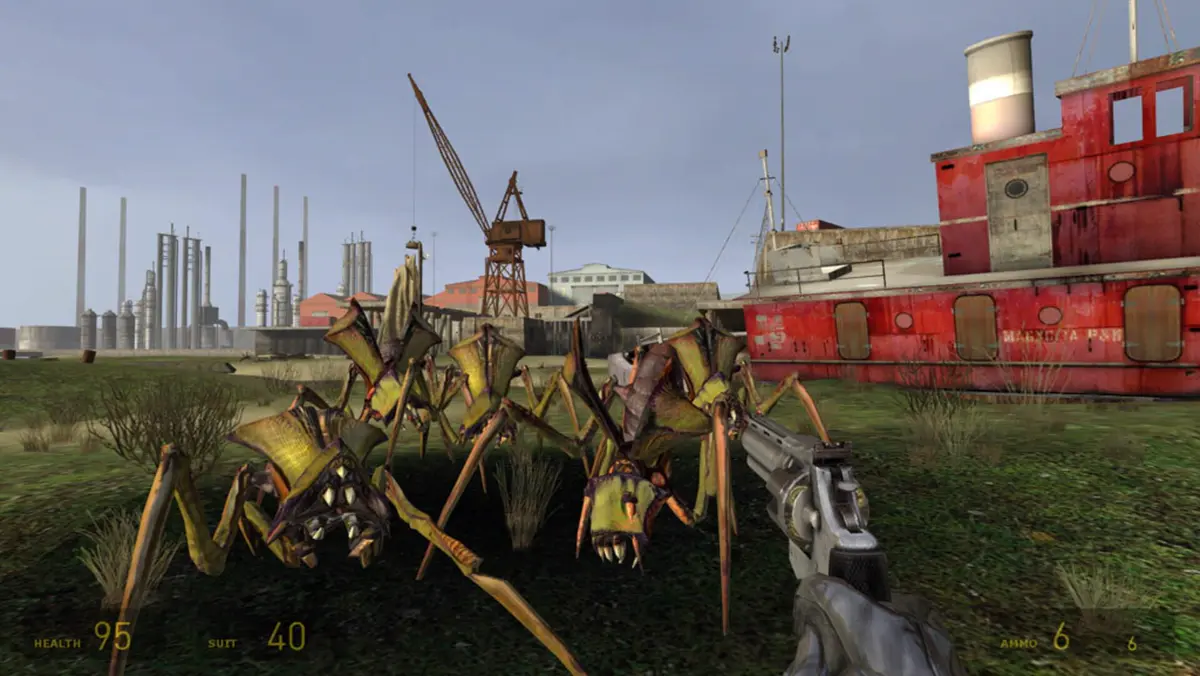
- Bugbait lets you turn antlions against your enemies[1]
Where it falls short
- Critics found the Xbox 360 graphics weaker than the PC version's[1]
- GameSpot reported framerate problems on PlayStation 3[1]
- At launch, critics objected to the required Steam account and to the game being locked to it[1]
- Computer Gaming World rated it below the original Half-Life[1]
- Single-player only, and rated Mature 17+ and PEGI 18[1]
Critic scores by outlet
| Outlet | Score | Out of 100 | Version | Date |
|---|---|---|---|---|
| GameRankings aggregate | 95.46% | 95 | Microsoft Windows | – |
| GameRankings aggregate | 89.83% | 90 | Xbox | – |
| Kritikanstvo aggregate of 17 | 94/100 | 94 | – | – |
| Metacritic aggregate | 96/100 | 96 | Microsoft Windows | – |
| Canard PC | 10/10 | 100 | Microsoft Windows | – |
Scores as recorded on Wikidata, with the outlet's own link where Wikidata cites one. User ratings are not listed.
- AnalysisThe level design of a single room in Half-Life 2
There's a small checkpoint room in the opening trainyard sequence of Half-Life 2 that most players walk through in under a minute without noticing anything happened. It's a bare, grey space with a…
- AnalysisHalf-Life 2 turns crates, saw blades and grenades into your best weapons
Half-Life 2 is a single-player first-person shooter. You play Gordon Freeman, who joins a resistance fighting to free Earth from the alien Combine empire. Its main idea is the gravity gun, a tool…
Community clips
See allCommunity images
See allNo community reviews yet. Be the first to review Half-Life 2: a score out of 10, what works, what doesn't.
How the score works
9.4GameRaven score = Critics 100%
- Critics9.4100%
- Community–0%
The GameRaven score of 9.4 is the critics' average, from critic aggregates, until members review the game. Community reviews and votes join it as they come in, each counting for more as more people stand behind it. How it's worked out.
Sources
References
- Wikipedia: Half-Life 2 en.wikipedia.org
Where the rest comes from
- Facts and critic scores: Wikidata item Q193581 (CC0), read November 12, 2026. Spotted something wrong? It can be corrected on Wikidata, and the change reaches this page the next time the catalogue is read.
- Summary: Wikipedia, CC BY-SA 4.0.
- Cover art: IGDB.
- Critics' overview written from: Wikipedia: Half-Life 2, CC BY-SA 4.0.
- Critics' overview written from: Wikidata: Q193581, CC0.
- How the score is worked out: methodology.