Where to buy Puppeteer
Amazon links are affiliate links: as an Amazon Associate we earn from qualifying purchases.
About the game
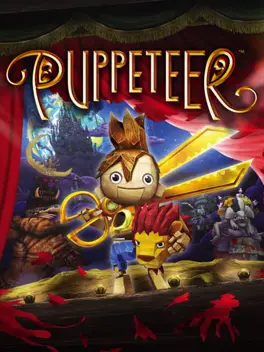
Puppeteer is a 2013 platform video game developed by Japan Studio and published by Sony Computer Entertainment for the PlayStation 3.
From the Wikipedia article Puppeteer (video game), by its contributors, under CC BY-SA 4.0.
Developer and publisher
Japan Studio Developer
Japanese video game developer
Based in Tokyo · founded 1993 · 10 other games here
Demon's Souls, Gravity Rush 2, Knack 2, The Last Guardian · all 11
Sony Interactive Entertainment Publisher
American multinational software company
Based in Tokyo · founded 1993 · 206 other games here
God of War Laufey, Wolverine, Saros, Marvel Tōkon: Fighting Souls · all 207
Platforms and release dates
| Platforms | PlayStation 3 |
|---|---|
| Released | September 5, 2013 |
Details
| Genre | platform game |
|---|---|
| Modes | single-player video game |
| Country | Japan |
| Age rating | Everyone 10+, PEGI 12 |
| Official site | us.playstation.com |
What critics say
Puppeteer's stage-show charm split critics by 10 points
A PS3 platformer built as a puppet show, where your head is your health and a pair of magic scissors cuts the scenery apart.
Is Puppeteer worth it?
Puppeteer commits fully to its puppet-show staging, and its D.I.C.E. nominations for animation, art direction and music show where its strength lies. Critic tallies of 75 and 85 suggest its head-swapping, scenery-cutting systems landed less evenly than its look did. If you have a PlayStation 3, play it, ideally with a second player handling the companion.
Best for: PlayStation 3 owners who want a theatrical, forgiving platformer, especially a parent and child who can split Kutaro and his companion between them.
Written from the published record (critics' reviews, the developer's documentation and the game's history), not a hands-on playthrough. How these are written.
What critics praised
- Puppet-show staging with a live audience that reacts to big moments[1]
- Nominated at the D.I.C.E. Awards for animation, art direction and original music[1]
- Losing your head on a hit, with a few seconds to grab it back, makes mistakes forgiving[1]
- Calibrus scissors and the four Champion powers give each act new ways to cut through and reshape the scenery[1]
- A second player can join as the companion and hunt for hidden heads and Moonsparkles[1]
Where it falls short
Critic scores by outlet
| Outlet | Score | Out of 100 | Version | Date |
|---|---|---|---|---|
| CriticDB aggregate of 6 | 85/100 | 85 | PlayStation 3 | – |
| Kritikanstvo aggregate of 10 | 75/100 | 75 | – | – |
Scores as recorded on Wikidata, with the outlet's own link where Wikidata cites one. User ratings are not listed.
- AnalysisPuppeteer's stage-show charm split critics by 10 points
Critics liked Puppeteer, but they didn't agree on how much. One aggregate, built from six reviews of the PlayStation 3 version, lands at 85/100. Another, counting 10 reviews, settles at 75/100…
Community clips
See allCommunity images
See allNo community reviews yet. Be the first to review Puppeteer: a score out of 10, what works, what doesn't.
How the score works
8.0GameRaven score = Critics 100%
- Critics8.0100%
- Community–0%
The GameRaven score of 8.0 is the critics' average, from critic aggregates, until members review the game. Community reviews and votes join it as they come in, each counting for more as more people stand behind it. How it's worked out.
Sources
References
- Wikipedia: Puppeteer (video game) en.wikipedia.org
Where the rest comes from
- Facts and critic scores: Wikidata item Q3891642 (CC0), read November 12, 2026. Spotted something wrong? It can be corrected on Wikidata, and the change reaches this page the next time the catalogue is read.
- Summary: Wikipedia, CC BY-SA 4.0.
- Cover art: IGDB.
- Critics' overview written from: Wikipedia: Puppeteer (video game), CC BY-SA 4.0.
- Critics' overview written from: Wikidata: Q3891642, CC0.
- How the score is worked out: methodology.